

Rising M2 money supply signal potential tailwinds for Bitcoin

Share This Post

Quick Take

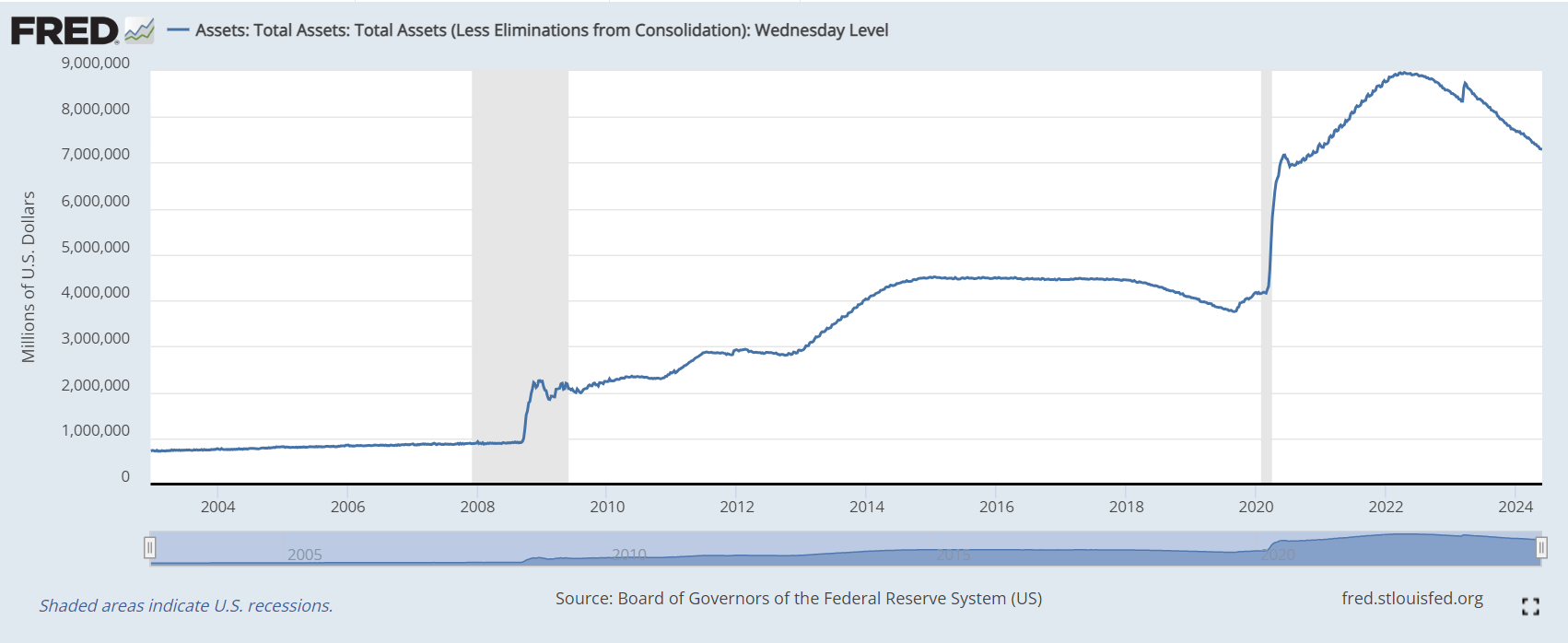
Analyzing recent data from the Federal Reserve Economic Data (FRED), we observe significant trends in the Federal Reserve’s balance sheet and the M2 money supply. The Federal Reserve’s balance sheet has been gradually declining (quantitative tightening), now standing at $7.3 trillion, down from a peak of $9.0 trillion in April 2022. Despite this reduction, it remains considerably higher than the pre-COVID-19 level of $4.1 trillion, indicating more than $3 trillion yet to be trimmed.
Fed Balance Sheet: (Source: FRED)

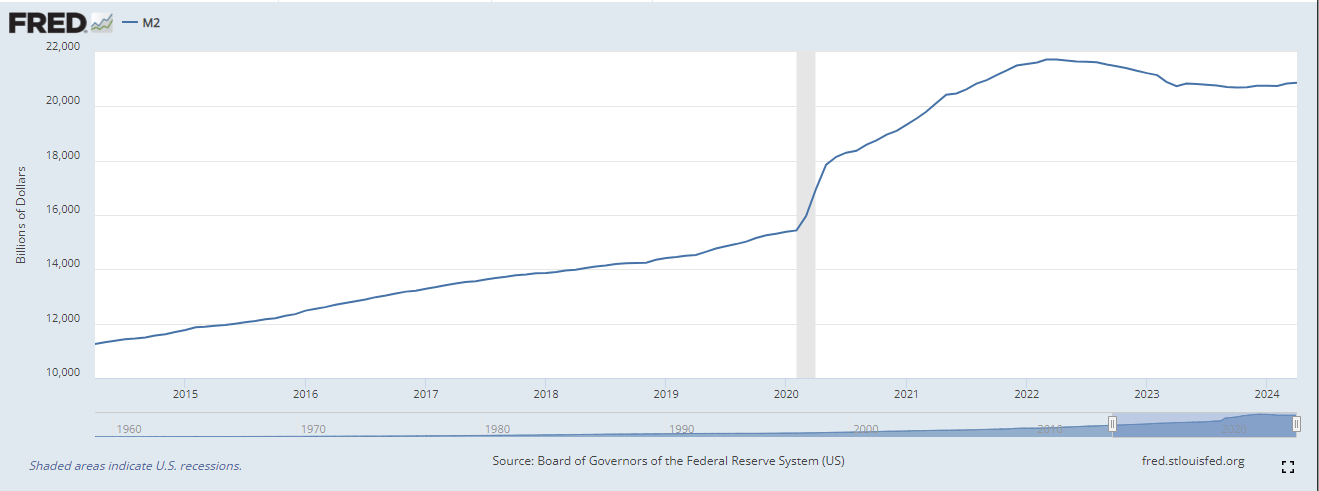
M2 money supply, which includes cash, checking deposits, and easily convertible near money, reached a peak of $21.7 trillion in 2022 and hit a low of $20.7 trillion in October 2023. It has since begun to rise, currently at $20.9 trillion, according to FRED.
M2: (Source: FRED)
M2: (Source: FRED)

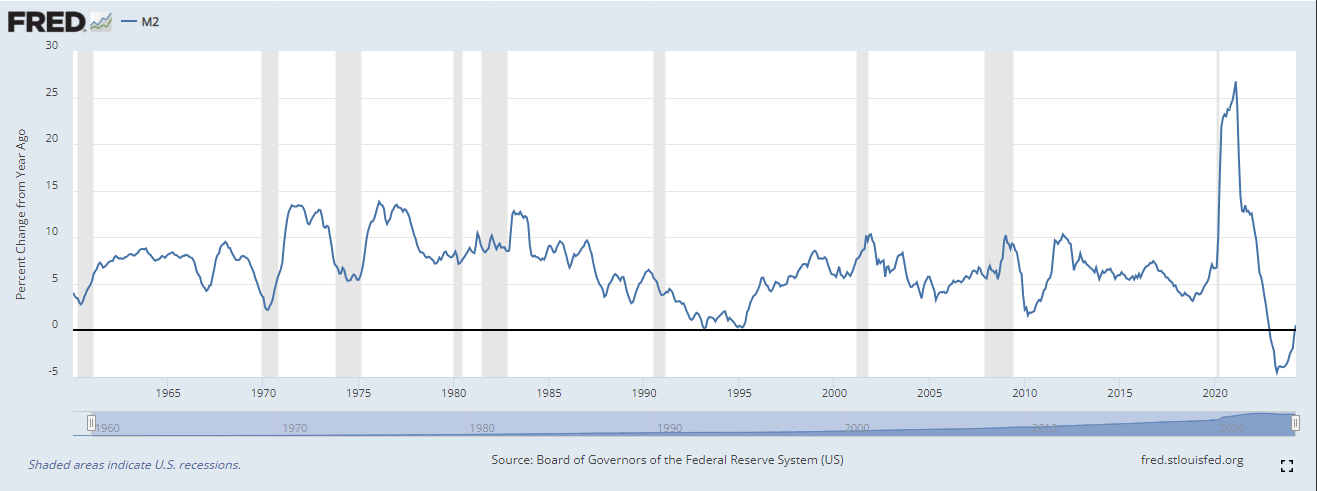
FRED data also shows that the M2 money supply’s year-over-year percentage change has turned positive for the first time since November 2022, signaling potential tailwinds for risk assets.
M2: (Source: FRED)
M2: (Source: FRED)

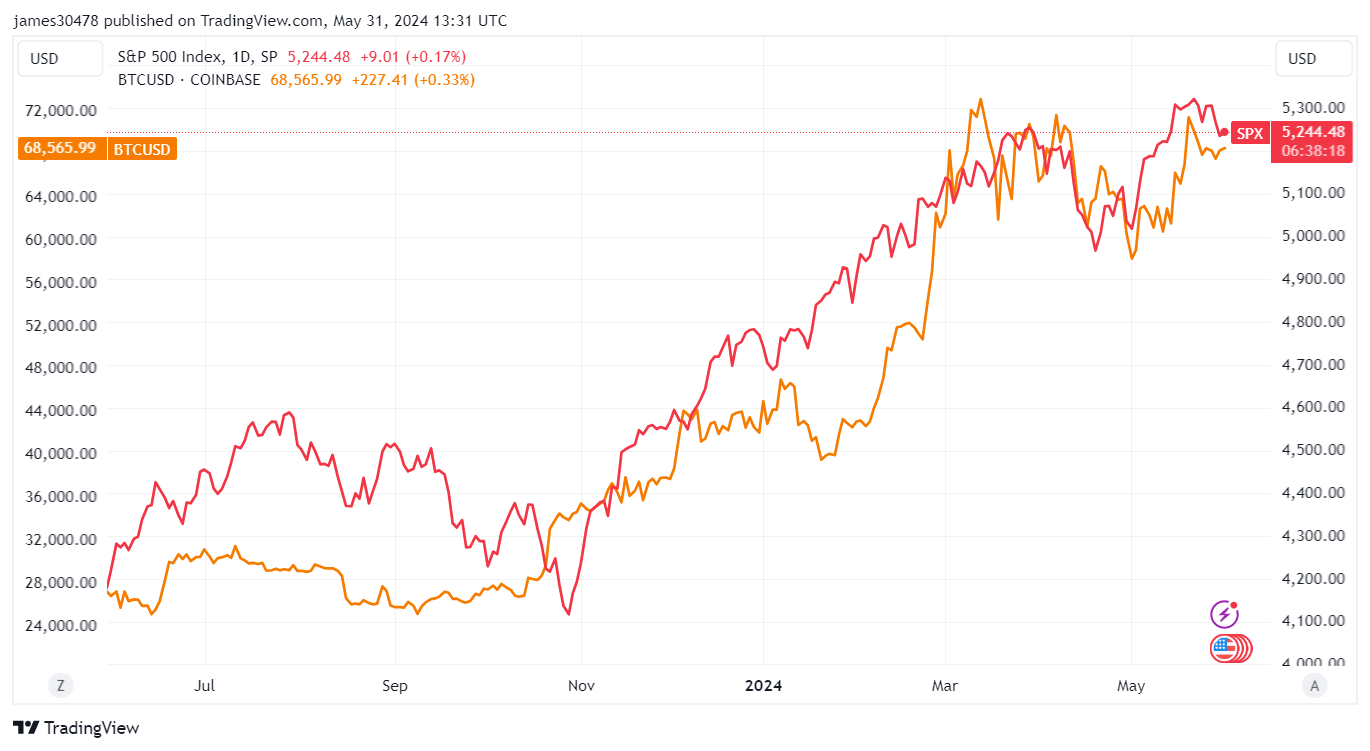
Coinciding with the increase in the M2 money supply, assets like Bitcoin and the S&P 500 (SPX) have shown significant growth since October 2023. Bitcoin has surged from $25,000 to over $70,000, and the SPX, after bottoming in October at approximately 4,100, has climbed to 5,244.
BTCUSD vs SPX: (Source: TradingView)

However, the growing money supply complicates efforts to curb inflation. Data from Trading Economics shows that the Personal Consumption Expenditures (PCE) Price Index year-over-year was reported at 2.7%, with the Core PCE at 2.8%, both aligning with expectations but reflecting persistent inflationary pressures. This ongoing challenge indicates that inflation remains sticky, posing difficulties for economic policy aimed at price stability.

PCE Data: (Source: Trading Economics)

The post Rising M2 money supply signal potential tailwinds for Bitcoin appeared first on CryptoSlate.


Read Entire Article
spot_img
- Advertisement -spot_img

Related Posts

Central Bank of Argentina Mulls Allowing Banks to Offer Crypto Services

According to local media, the central bank is examining the possibility of issuing a new ruleset to allow banks to enter the cryptocurrency business Local analysts say this would open the door for

Bitcoin Market Profitability Hits ‘Complete Reset’ — What’s Next For Price?

Following a fresh wave of bearish pressure on Friday, December 5, the price of Bitcoin has struggled beneath the psychological 90,000 level for much of the weekend However, the latest on-chain data

Ease Up, Bitcoin Investors – No More Negative Days For BTC In 2025 

The cryptocurrency market has had a year filled with ups and downs, with most large-cap digital assets turning in mixed performances in 2025 After a rough start to the year, things started to look up

Crypto officially becomes a “third category” of property, fixing the fatal flaw in digital asset ownership.

The UK doesn’t pass many one-clause statutes that redraw the map of personal property, but that’s exactly what arrived with Royal Assent on Dec2 After years of academic papers, Law Commission

Real-World Asset Market Cools off With a 1.09% Pullback This Month

Tokenized real-world assets (RWAs) slipped slightly this month, with total distributed value falling 109% as $268 million quietly exited the sector since the first of November Worldwide RWA Value

What Caused Bitcoin Price To Crash Below $90K Today?

The post What Caused Bitcoin Price To Crash Below $90K Today appeared first on Coinpedia Fintech News Bitcoin fell sharply on Friday, slipping below $90,000 after a wave of leveraged liquidations hit