

MicroStrategy, the largest corporate holder of Bitcoin, has officially launched a groundbreaking decentralized identity system named ‘MicroStrategy Orange’. This innovative solution was introduced by Michael Saylor, the company’s executive chairman, during their ‘Bitcoin For Corporations’ conference on May 1.
MicroStrategy’s Bold Move Into Bitcoin-Powered DIDs
MicroStrategy Orange is engineered to utilize the Bitcoin network’s robust security and decentralization features by incorporating a modified version of the Ordinals inscription method. This method, which came into prominence earlier this year, involves embedding data within the Bitcoin blockchain’s transaction outputs. Unlike traditional blockchain-based identity solutions that might depend on sidechains or auxiliary networks, Orange operates directly within the Bitcoin blockchain.
“MicroStrategy Orange aims to redefine the landscape of digital identity by harnessing the untampered security and widespread recognition of the Bitcoin network,” stated Saylor. He highlighted that the system is capable of processing up to 10,000 decentralized identifiers (DIDs) in a single transaction, showcasing its potential for scalability and efficiency.
An unofficial draft of the MicroStrategy Orange system available on GitHub details its adherence to the latest standards set forth by the W3C’s Decentralized Identifiers (DID) specification. This specification is crucial for ensuring that the digital identities are trustless, tamper-proof, and have longevity, relying solely on the public Bitcoin blockchain for data retrieval and storage.
The technical backbone of MicroStrategy Orange is built around three main components: the Orange Service, the Orange SDK, and various Orange Applications. The Orange Service acts as the primary platform for issuing DIDs, which are unique digital identifiers that provide a way to verify a holder’s identity without revealing any personal data. This service could be particularly transformative for sectors requiring high trust but minimal data disclosure, such as finance and healthcare.
The Orange SDK provides developers with the tools necessary to integrate the decentralized identity capabilities of Orange into existing applications. This could include everything from enhancing the security of email communications with digital signatures to verifying identities on social media platforms.
One of the first applications developed using this SDK is ‘Orange for Outlook’, which integrates digital signature verification to confirm the authenticity of email senders. This application illustrates how the Orange SDK can be employed to bolster security and trust in everyday digital communications.
The practical applications of MicroStrategy Orange are vast. In addition to email identity verification, the platform aims to extend its reach to other messaging platforms, social media networks, and various sectors including e-commerce, enterprise solutions, and fintech.
By securing digital identities on the Bitcoin blockchain, MicroStrategy Orange introduces a new layer of security and authenticity, addressing common vulnerabilities found in traditional digital identity systems, such as fraud and identity theft.
Market Context And Strategic Timing
The launch of Orange comes at a time when MicroStrategy reported a $53.1 million net loss for the first quarter of the year. However, it’s important to note that this financial report does not reflect the substantial appreciation in the market value of the company’s Bitcoin holdings, which increased by 65% over the quarter, valuing its total holdings at approximately $15.2 billion.
Looking forward, MicroStrategy’s foray into decentralized identity solutions represents a significant pivot in its business strategy, utilizing its substantial Bitcoin resources to innovate beyond mere cryptocurrency investment. The potential integration of digital identities with a verifiable credential ecosystem opens up numerous possibilities for user verification across platforms, potentially introducing a standardized “orange check” for verified users, akin to the blue checkmark used on platforms like X.
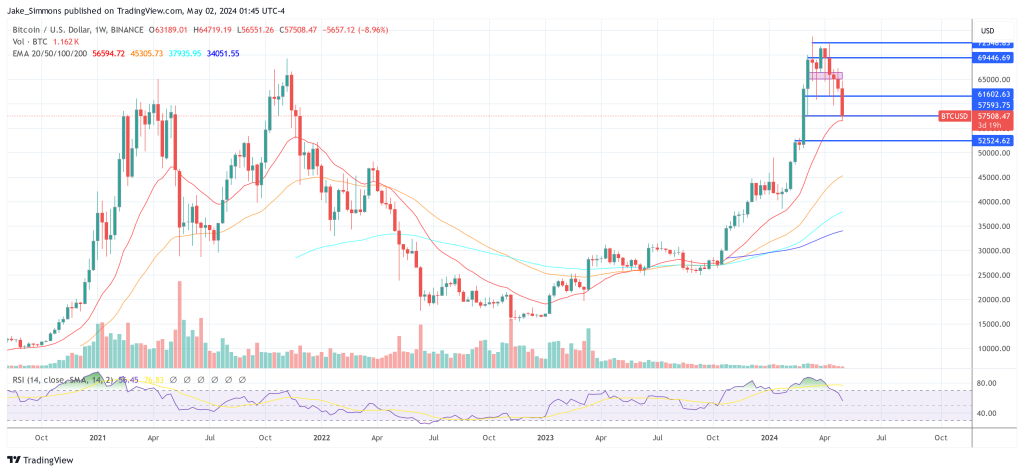
At press time, BTC traded at $57,508.