


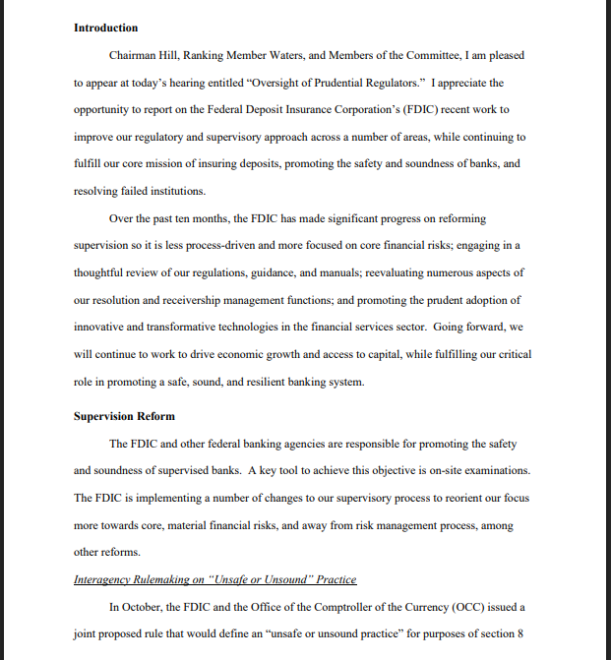
According to prepared testimony from Acting FDIC Chair Travis Hill, the agency expects to publish a proposed rule that lays out how stablecoin issuers will apply for federal oversight before the end of December 2025.
What The Draft Will Cover
Based on reports, the initial proposal will focus on the “application framework” — the paperwork, disclosures and standards firms must meet to seek approval as regulated stablecoin issuers.
The proposal is not the final set of bank-level rules; it will outline the process, while a second proposal that spells out capital, liquidity and reserve requirements is slated for early next year.
Market Reaction And Immediate Impact
Reports have disclosed that the GENIUS Act, the law behind this process, named the FDIC as a lead regulator for bank-related stablecoins and set deadlines for implementing agencies to act.
The move is expected to provide clearer guidance for firms that want to issue USD-pegged coins under federal supervision. Some firms could alter their timelines or pause launches until the rules are final.
Stablecoin: How The Law Got Here
The GENIUS Act was passed by Congress in mid-2025 and signed into law by US President Donald Trump on July 18, 2025. The Senate approved the bill by a 68–30 vote and the House backed it 308–122.
The statute lays out which agencies do what, and it requires a sequence of rulemakings, such as capital and liquidity standards, that regulators must implement.
Public Comment Period
Officials say the FDIC’s first proposed rule will be followed by a public comment period, giving industry groups, banks and nonbank firms a chance to respond.
After that, prudential measures aimed at FDIC-supervised issuers — the rules that set minimum capital cushions and reserve asset standards — will be proposed early next year.
Analysts and industry observers will be watching closely to see whether the FDIC limits its oversight mainly to bank-sponsored stablecoins or seeks a broader scope.
They will also pay attention to how strict the capital and liquidity requirements will be when the rules are proposed in early 2026.
Coordination with other regulatory agencies will be another key focus, since the GENIUS Act assigns responsibilities across several federal regulators.
Featured image from Unsplash, chart from TradingView