


Bitcoin Magazine
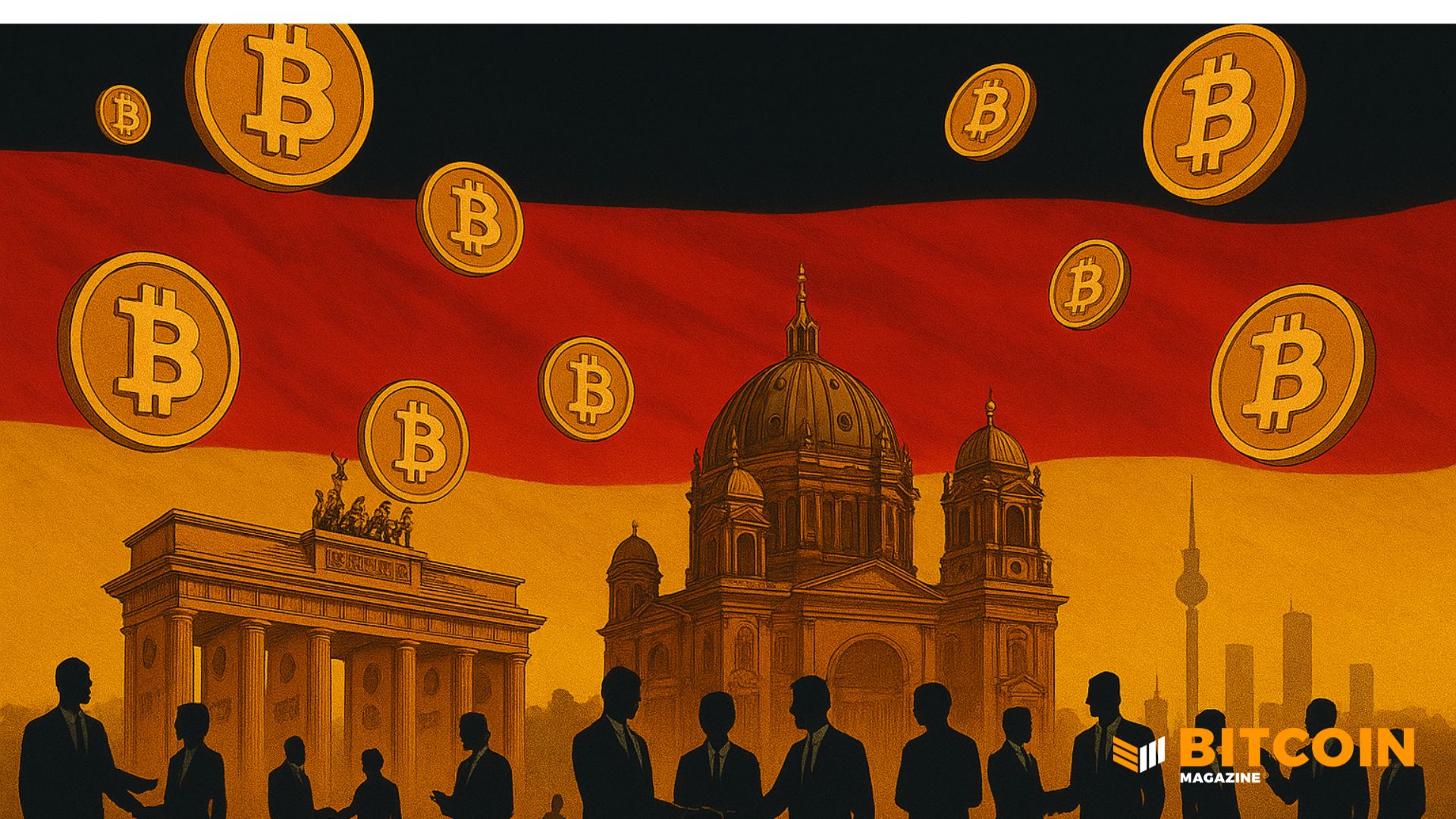
Germany Proposes National Bitcoin Reserve, Views Bitcoin as ‘State-Free’ Money
Germany’s Alternative for Germany (AfD) party has introduced a proposal to create a national Bitcoin reserve.
The initiative marks a potential turning point for Europe’s largest economy, which only a year ago was criticized for liquidating billions in seized Bitcoin holdings.
The motion, which needs to be approved, would make Germany the first major European nation to integrate Bitcoin directly into its national reserves, signaling a growing shift in Europe toward viewing Bitcoin not as a speculative asset, but as a sovereign reserve instrument.
AfD’s vision for a Bitcoin as “state-free money”
The AfD’s motion, submitted last week, calls on the federal government to begin accumulating Bitcoin as part of its long-term reserve strategy.
The proposal argues that the EU’s MiCA framework was designed for centrally issued tokens and should not apply to Bitcoin, which has no issuer or central authority.
It urges the government to avoid regulatory burdens on non-custodial wallet providers and Lightning node operators, maintain Germany’s tax exemption on Bitcoin held for more than a year, and ensure that private mining or Lightning activity is not classified as commercial.
The AfD frames Bitcoin as “state-free money” that protects individual freedom in contrast to the planned digital euro, which it warns could enable surveillance and control.
JUST IN:
Germany’s second-largest party, AfD, introduced a motion to build a #Bitcoin reserve. pic.twitter.com/TeM4yUoIVe
— Bitcoin Magazine (@BitcoinMagazine) October 29, 2025
In the proposal’s Section I, point 5, the AfD criticizes the German government for failing to recognize Bitcoin’s strategic potential, specifically noting that Berlin has not considered holding Bitcoin as part of its national reserves.
Later in the explanatory section, the document expands on this idea, describing Bitcoin as “Outside Money” and suggesting that, in times of global monetary and geopolitical instability, it could serve as a “potential, easily transferable asset within state currency reserves.”
The motion marks the first formal attempt in Germany’s legislature to position Bitcoin as a strategic national asset.
Germany: From seller to ‘hodler’
The proposal comes less than a year after the German government completed one of the largest state-level Bitcoin selloffs in history.
Between June and July 2024, German authorities sold nearly 50,000 BTC — originally seized from the operators of the piracy site Movie2k.to — worth about $3 billion at the time.
The selloff triggered a market correction of roughly 18% and drew heavy criticism from the Bitcoin community, which argued that Germany squandered a chance to hold a scarce, appreciating asset.
By mid-July 2024, blockchain data confirmed that wallets linked to the German government were empty, after sending the final tranches of Bitcoin to exchanges and market makers.
A European race for Bitcoin sovereignty
Germany’s move follows closely on the heels of France, where the center-right Union of the Right and Centre (UDR) party, led by lawmaker Éric Ciotti, introduced an ambitious bill to create a “National Bitcoin Strategic Reserve.”
The French proposal targets 2% of Bitcoin’s supply — approximately 420,000 BTC — over a seven-to-eight-year period. It would fund accumulation through surplus energy-powered Bitcoin mining, reallocation of savings programs, and even partial tax payments in Bitcoin.
While both France’s and Germany’s initiatives face significant political hurdles, the timing underscores a recognition in Europe that Bitcoin could serve as a tool for financial sovereignty.
If the momentum continues, Europe could soon find itself not debating whether to hold Bitcoin — but who will hold it first.
This post Germany Proposes National Bitcoin Reserve, Views Bitcoin as ‘State-Free’ Money first appeared on Bitcoin Magazine and is written by Micah Zimmerman.